
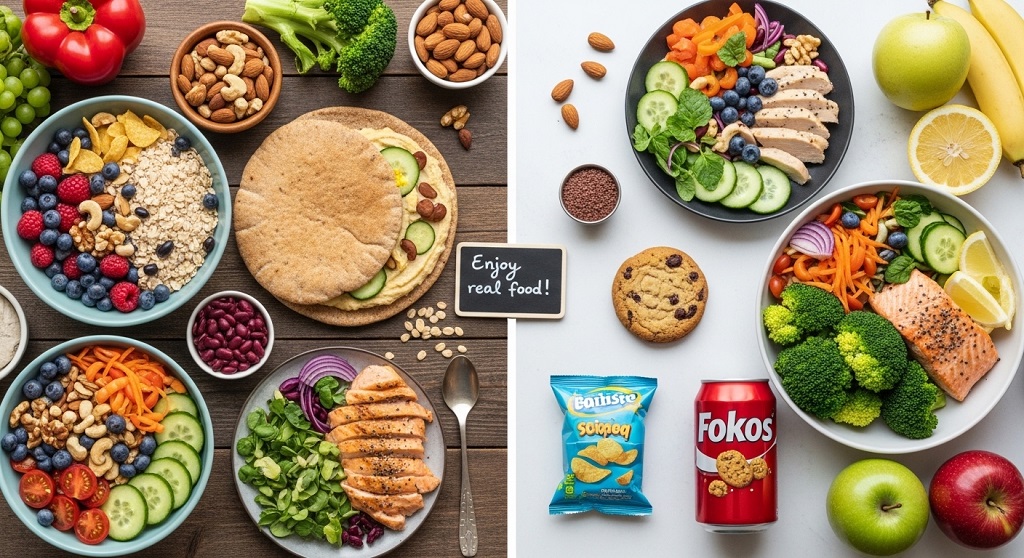
Ultra-processed foods are everywhere. They’re fast, cheap, and engineered to taste irresistible. But they quietly increase inflammation, disrupt appetite signals, and make healthy eating feel harder than it should be.
Most people assume the only solution is strict dieting. That rarely works. The real solution is replacing—not restricting—what you eat.
This guide shows how to reduce ultra-processed foods step by step without losing convenience, flavor, or satisfaction. You’ll learn what to swap, what to keep, and how to make the transition sustainable long term.
What Are Ultra-Processed Foods—and Why Should You Reduce Them?
Ultra-processed foods are industrial formulations made mostly from refined ingredients, additives, and artificial flavors rather than whole foods. Reducing them improves energy, stabilizes appetite, lowers chronic disease risk, and helps restore natural hunger signals without requiring strict dieting or calorie counting.
Answer Block: Ultra-processed foods contain refined starches, added sugars, industrial oils, and additives that disrupt appetite control and metabolic health. Reducing them supports stable energy, weight balance, and long-term disease prevention while making real food taste better again over time.
Ultra-processed foods are not just packaged foods. They are products engineered for shelf life and hyper-palatability. Common examples include flavored chips, instant noodles, packaged desserts, processed meats, sugary cereals, and soft drinks.
These foods typically contain:
- Refined flour instead of whole grains
- Added sugars and syrups
- Industrial seed oils
- Flavor enhancers and preservatives
- Artificial colors or emulsifiers
Research consistently links high intake of ultra-processed foods with increased risk of obesity, diabetes, heart disease, and digestive problems.
The goal is not perfection. Even reducing intake by 30–50% improves health markers significantly.
Why Are Ultra-Processed Foods So Hard to Stop Eating?
Answer Block: Ultra-processed foods are designed to override hunger regulation through combinations of salt, sugar, and fat. They digest quickly, fail to create fullness, and encourage overeating. This makes reducing them feel difficult unless replacements maintain convenience and satisfaction.
Ultra-processed foods activate reward pathways in the brain. That makes them easy to crave repeatedly.
They also digest faster than whole foods. Rapid digestion causes blood sugar spikes followed by energy crashes. This cycle increases hunger within hours.
Common triggers include:
- Late-night snacking habits
- Stress eating routines
- Convenience-driven food choices
- Marketing exposure
- Busy work schedules
When people try to eliminate these foods suddenly, they often replace them with nothing. Hunger increases, cravings return, and motivation drops.
A smarter strategy focuses on upgrading meals instead of removing foods entirely.
Which Ultra-Processed Foods Should You Replace First?
Answer Block: Start by replacing sugary drinks, packaged snacks, processed breakfast foods, and instant meals. These contribute the highest amounts of added sugar, refined carbohydrates, and additives. Replacing just these categories reduces overall ultra-processed intake quickly and sustainably.
Not all ultra-processed foods have equal impact. Some contribute more calories and additives than others.
| Food Category | Why It Matters | Better Replacement |
|---|---|---|
| Sugary drinks | Rapid blood sugar spikes | Water with lemon or herbal tea |
| Packaged snacks | Low satiety, high additives | Nuts or fruit |
| Instant noodles | Refined carbs and sodium | Rice with vegetables and eggs |
| Sweet cereals | High sugar breakfast start | Oats with yogurt |
| Processed meats | Preservatives and nitrates | Fresh chicken or lentils |
Replacing beverages alone often cuts daily sugar intake dramatically.
Breakfast upgrades are the second fastest improvement strategy.
How Can You Reduce Ultra-Processed Foods Without Feeling Deprived?
Answer Block: Reduce ultra-processed foods by upgrading meals instead of restricting them. Replace packaged snacks with protein-rich alternatives, cook simple staple meals at home, and keep convenient whole-food options available. Satisfaction improves when meals contain fiber, protein, and healthy fats.
Deprivation happens when meals lack structure.
Balanced meals naturally reduce cravings because they stabilize blood sugar and support fullness.
Use this simple plate formula:
- ½ vegetables
- ¼ protein
- ¼ whole carbohydrates
- Add healthy fats
Examples include:
- Rice with lentils and vegetables
- Eggs with whole-grain toast
- Yogurt with fruit and nuts
- Chicken with potatoes and salad
These meals require minimal preparation but reduce processed food reliance quickly.
Convenience improves when ingredients are pre-planned weekly.
What Are the Best Simple Swaps for Everyday Meals?
Answer Block: Replace refined packaged foods with minimally processed staples like oats, eggs, rice, lentils, yogurt, fruit, and nuts. These foods cook quickly, improve fullness, and reduce sugar intake while maintaining flavor, affordability, and accessibility across different dietary preferences.
Meal upgrades do not require complex recipes.
Start with these substitutions:
- Swap chips for roasted peanuts
- Swap soda for lemon water
- Swap biscuits for bananas
- Swap instant noodles for vegetable stir-fry
- Swap processed spreads for peanut butter
These replacements preserve texture and satisfaction.
They also improve fiber intake, which supports digestive health and appetite regulation.
Over time, taste preferences adapt naturally.
How Does Meal Planning Reduce Ultra-Processed Food Intake?
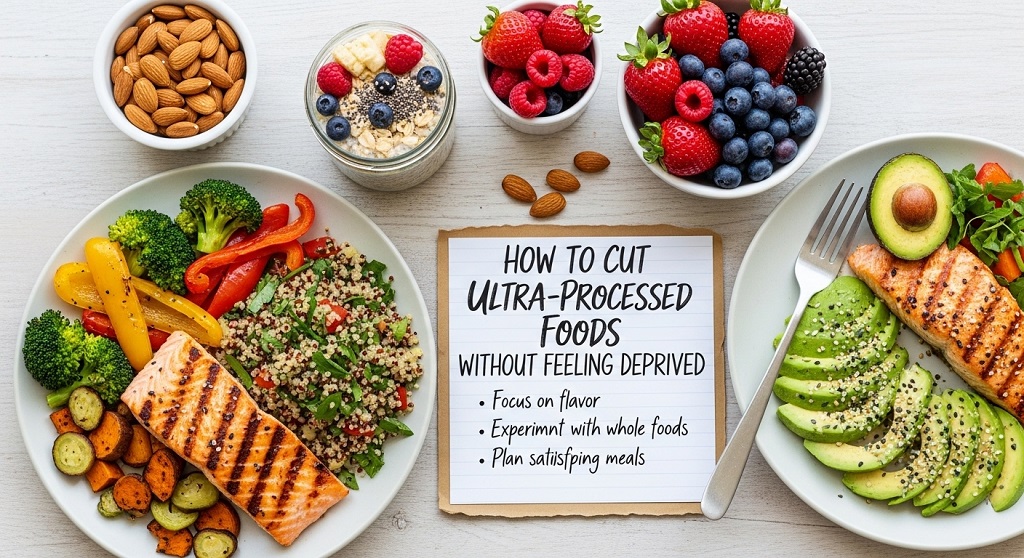
Answer Block: Meal planning reduces reliance on ultra-processed foods by removing last-minute decisions. Preparing ingredients ahead ensures healthy options remain accessible during busy schedules, preventing convenience-based choices that often lead to packaged snacks, fast food, and sugary beverages.
Most processed food consumption happens when meals are unplanned.
A simple weekly structure helps:
- Cook rice or grains in batches
- Store boiled eggs for quick meals
- Wash and refrigerate vegetables
- Keep fruit visible on counters
This reduces preparation time during weekdays.
Even preparing two staple dishes weekly improves consistency significantly.
Planning also lowers grocery costs and reduces food waste.
Can You Still Eat Some Ultra-Processed Foods Occasionally?
Answer Block: Occasional ultra-processed foods are acceptable when most meals come from whole ingredients. A practical guideline is the 80/20 approach, where 80 percent of meals are minimally processed and 20 percent remain flexible for convenience or social situations.
Strict avoidance often leads to rebound eating.
Instead, define personal limits.
Examples include:
- Weekend treats only
- One packaged snack per day maximum
- No sugary drinks on weekdays
This structure maintains flexibility while protecting long-term health habits.
Sustainable nutrition always allows room for real life.
How Long Does It Take to Adjust to Fewer Ultra-Processed Foods?
Answer Block: Most people notice reduced cravings within one to three weeks after lowering ultra-processed foods. Taste sensitivity improves, energy stabilizes, and hunger patterns normalize. Consistent meal structure accelerates adaptation and makes whole foods more satisfying over time.
The first week often feels unfamiliar.
This happens because taste receptors adapt to lower sugar and salt levels.
By week two, many people report:
- Fewer cravings
- Improved digestion
- Better sleep
- More stable energy
After one month, natural foods usually become more appealing than packaged alternatives.
This shift makes long-term change easier than expected.
Conclusion: What Is the Simplest Way to Start Today?
Reducing ultra-processed foods does not require strict dieting. It requires smarter replacements.
Start with beverages. Upgrade breakfast. Add protein to snacks. Plan two weekly meals ahead of time. These changes alone transform daily eating patterns.
Consistency matters more than perfection.
Even small improvements reduce inflammation, stabilize appetite, and improve long-term metabolic health.
Choose one swap today. Replace one packaged snack. Prepare one simple home meal. Drink one fewer sugary beverage.
Small steps repeated daily create lasting dietary change without stress or restriction.
Start now and let progress build naturally.
Frequently Asked Questions
Are all packaged foods considered ultra-processed?
No. Some packaged foods like frozen vegetables, plain yogurt, and canned beans are minimally processed. Ultra-processed foods contain additives, artificial flavors, refined sugars, and industrial ingredients not used in home cooking.
Is bread an ultra-processed food?
Traditional bread made from flour, water, salt, and yeast is minimally processed. Commercial packaged bread with preservatives, emulsifiers, and added sugars qualifies as ultra-processed depending on formulation.
Can reducing ultra-processed foods help weight loss?
Yes. Whole foods improve satiety and reduce calorie intake naturally. Many people lose weight without counting calories after replacing ultra-processed foods with fiber-rich meals.
Are instant noodles unhealthy occasionally?
Occasional consumption is acceptable. Regular intake increases sodium exposure and reduces diet quality. Pairing them with vegetables and protein improves nutritional balance.
What is the fastest change I can make today?
Replace sugary beverages with water or tea. This single adjustment significantly lowers daily sugar intake and improves appetite control within days.
Do ultra-processed foods affect energy levels?
Yes. Rapid digestion causes blood sugar spikes followed by crashes. Whole foods release energy more gradually, supporting consistent focus and physical performance.
Is it expensive to avoid ultra-processed foods?
No. Staple foods like rice, lentils, eggs, oats, and vegetables are often cheaper than packaged snacks and ready meals when purchased regularly.
Read More Also: How to Relieve Menstrual Cramps Naturally & Fast
Learn More: When Is Mens Mental Health Month? Full Guide


