
Knee surgery changes everything for a while. Simple tasks become challenging. Getting around feels different. And the idea of traveling while recovering can seem frightening. However, many people do it successfully every year with the right preparation.
Whether you need to fly home after surgery abroad or attend an important event during your recovery, traveling after surgery is manageable. It simply requires careful planning and the right tools. This article will guide you through every step of the process. You will learn how to protect your knee, manage discomfort, and arrive at your destination feeling as well as possible.
Talk to Your Doctor Before You Book Anything
The very first thing you should do is speak with your surgeon or doctor. This step is non-negotiable. Your medical team knows the details of your specific surgery and recovery timeline.
Ask your doctor directly when it is safe to travel. The answer depends on the type of surgery, your age, and how well your body is healing. Some patients can travel within a few days. Others need to wait several weeks. Additionally, ask about the risks specific to your situation, such as blood clot formation during long flights or the impact of altitude changes on swelling.
Get written clearance from your doctor if possible. Airlines sometimes request medical documentation for passengers recovering from surgery. Having this ready saves you stress at the airport.
Understanding the Risks of Traveling After Knee Surgery
Traveling after surgery comes with certain risks you need to understand. One of the most serious concerns is deep vein thrombosis, commonly known as DVT. This is a blood clot that can form in the leg during long periods of sitting. People recovering from knee surgery are at a higher risk than average travelers.
Swelling is another common issue. When you sit for long periods without elevating your leg, fluid can build up around the knee. This causes discomfort and can slow your recovery. Therefore, taking regular breaks to stand and move is important, even on a plane.
Infection is also a concern in the early weeks after surgery. Airports and public transport areas expose you to many germs. Keeping your wound clean and covered is essential. Additionally, changes in cabin pressure during flights can sometimes increase pain or swelling temporarily. Knowing these risks helps you prepare for them instead of being caught off guard.
How to Plan Your Journey Smartly
Good planning makes the biggest difference. Start thinking about your travel logistics as early as possible.
Book aisle seats on any flight or train. This allows you to stretch your leg more easily and get up without disturbing others. Many airlines will also allow you to request a bulkhead seat, which offers extra legroom. Call ahead and explain your situation. Most carriers are willing to accommodate passengers recovering from surgery.
If your journey is long, break it up when you can. A layover might feel annoying under normal circumstances, but when you are recovering, it gives you a chance to walk around, stretch, and reduce the risk of blood clots forming.
Plan your ground transportation in advance too. Know whether you will need a wheelchair at the airport. Arrange for someone to pick you up at your destination. Avoid situations where you might be left standing for a long time without a place to rest.
What to Pack for a Comfortable Recovery Journey
Packing the right items is essential when you are recovering from knee surgery. Your bag should be lighter than usual because you should not be lifting or carrying heavy loads. Ask a travel companion to handle the luggage whenever possible.
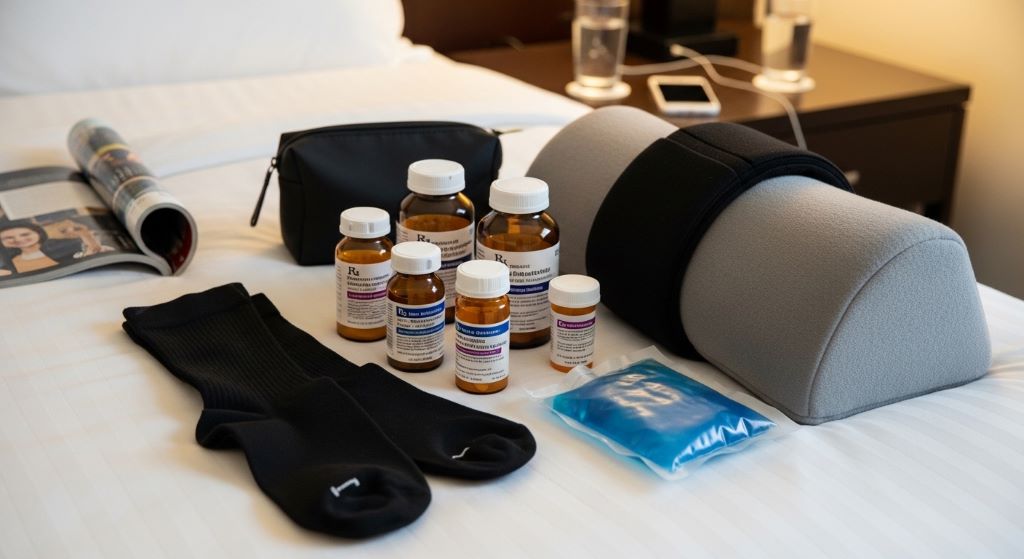
Here is a list of items worth bringing:
- Your prescribed medications and a copy of your prescription
- A compression stocking or sock, if your doctor has recommended one
- A pain relief pillow designed to support and elevate the knee during travel
- Ice packs or a cold compress pouch for reducing swelling
- A lightweight, foldable cane or crutch if you still need walking support
- Loose, comfortable clothing that does not press against your knee
- A small first aid kit with clean bandages and antiseptic wipes
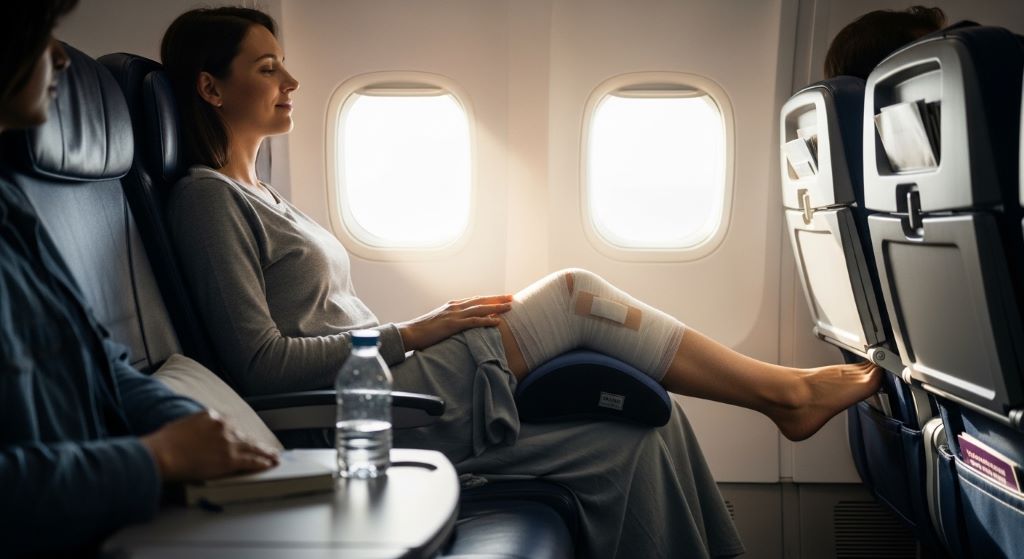
A pain relief pillow is one of the most practical items you can bring. It allows you to elevate your knee during the flight or car ride. Elevation reduces swelling and helps manage discomfort significantly. Look for a pillow that is wedge-shaped or contoured for the knee specifically.
Managing Pain and Discomfort During the Journey
Pain management on the move requires a layered approach. Do not rely on medication alone. There are several strategies that work together to keep discomfort at a manageable level.
Take your prescribed pain medication at the right time. If your journey starts early in the morning, make sure you have taken your dose before you leave. Do not wait until the pain becomes severe before taking medication. Staying ahead of the pain is far easier than catching up to it.
Elevation is your best friend during travel. Keeping your knee raised above your heart level reduces swelling and pressure. This is where a pain relief pillow becomes incredibly useful. Place it under your knee whenever you are seated for an extended period.
Cold therapy also helps during travel. A reusable cold pack applied to the knee for 15 to 20 minutes at a time can ease inflammation. Some travel cold packs stay cold for several hours without needing refrigeration. Ask your pharmacist or medical supplier about options.
Compression garments can further reduce swelling in the leg and knee. However, always consult your doctor before using compression socks or sleeves after surgery, as they are not suitable for every patient.
Exercises and Movements to Do During Travel
Staying still for too long increases your risk of blood clots and stiffness. Even small movements matter enormously during a long journey.
Your surgeon or physiotherapist may have given you specific exercises to do during the recovery period. These often include ankle pumps, where you flex your foot up and down repeatedly. This simple movement keeps blood circulating through your legs and helps prevent clots.
Gentle knee bends are another option, depending on how far along you are in recovery. While seated, try slowly straightening your leg and then lowering it again. Do this carefully and stop if you feel sharp pain.
Every hour or so, try to stand up and take a short walk. On a plane, this might mean walking to the bathroom and back. On a road trip, ask the driver to stop at a rest area. These breaks are not optional when you are recovering from knee surgery. They are part of your medical care.
Arriving at Your Destination
The journey does not end when you land or pull into the station. How you handle the first few hours after arriving matters just as much as the journey itself.
Give yourself time to rest before doing anything else. Do not rush to unpack, explore, or attend events immediately. Your body has just been through a physically demanding experience, even if you were mostly sitting. Rest is a legitimate part of your recovery plan.
Set up your accommodation to support your healing. Keep your pain relief pillow accessible so you can elevate your knee whenever you rest. Place essential items within easy reach so you do not have to bend down or stretch awkwardly to get them.
Find out where the nearest medical facility is, just in case. Know the local emergency number. This is not about being anxious. It is about being prepared so you can feel more relaxed and confident during your stay.
Tips for Traveling After Surgery on Different Transport Types
The type of transport you use affects your experience significantly. Each mode of travel has its own considerations.
On a plane, arrive early. This gives you extra time to board, get settled, and arrange your leg comfortably before other passengers fill the aisle. Request pre-boarding assistance when you check in. Most airlines offer this service without extra charge for medical passengers.
On a train, book a seat with a footrest or extra legroom. Trains often allow more freedom to stand and walk compared to planes, so take advantage of this. Visit the dining car or simply walk the length of the train if you feel up to it.
In a car, never sit in a position where your knee is bent sharply for hours at a time. Recline the seat slightly, use a pillow for support, and stop every 60 to 90 minutes. If you are driving yourself, check with your doctor first, as many surgeons advise against driving for several weeks after knee surgery.
Emotional Well-Being During Recovery Travel
Physical recovery gets most of the attention, but emotional well-being matters just as much. Traveling while injured or recovering can feel frustrating. You may not be able to do everything you planned. You might need more help than you are used to asking for.
Therefore, adjusting your expectations is important. Acknowledge that this trip will look different. That is perfectly okay. Focus on what you can do rather than what you cannot. Additionally, let the people around you help. Accepting assistance is a sign of wisdom, not weakness.
If anxiety about traveling after surgery feels overwhelming, talk to someone. Your doctor, a counselor, or even a trusted friend can help you work through your concerns. Traveling while recovering is challenging, but many people do it and come out the other side stronger.
Conclusion
Recovering from knee surgery during travel is not easy, but it is absolutely possible. The key is preparation. Talk to your doctor before you travel. Understand the risks and take them seriously. Pack the right items, including a pain relief pillow to support and elevate your knee throughout the journey.
Manage your pain with a combination of medication, elevation, cold therapy, and regular movement. Choose your transport wisely and make adjustments that protect your knee at every stage. Take care of your emotional health as well as your physical recovery.
With the right mindset and the right tools, traveling after surgery can be handled safely and even comfortably. Your knee will thank you for the extra care you give it along the way.
Frequently Asked Questions
How soon after knee surgery can I travel by plane?
Most surgeons recommend waiting at least two to four weeks before flying after knee surgery, depending on the type of procedure. Always consult your doctor before booking any travel. They will assess your individual healing progress and advise on the safest timeline.
What is the best way to elevate my knee during a long flight?
A wedge-shaped pain relief pillow designed for the knee is the most effective option. You can place it under your knee while seated to maintain elevation and reduce swelling. Some travelers also use rolled blankets or a standard pillow, though purpose-designed options provide better support.
Can I use compression socks after knee surgery while traveling?
Compression socks can help reduce the risk of blood clots during travel. However, they are not suitable for all patients after knee surgery. Some surgical wounds or conditions may make compression wear unsafe. Always ask your surgeon before using them.
What should I do if my knee swells significantly during travel?
Stop and elevate the leg as soon as possible. Apply a cold pack if you have one available. If swelling is severe, painful, or accompanied by redness and warmth, seek medical attention immediately. These symptoms can indicate a blood clot or infection that needs urgent care.
Is it safe to drive after knee surgery?
Driving is generally not recommended in the early weeks after knee surgery, especially if the surgery was on the right knee, which controls the accelerator and brake. Most surgeons advise waiting at least four to six weeks, or until you have full control of the leg. Always get clearance from your doctor before driving.
Related Topics:
How to Relieve Menstrual Cramps Naturally & Fast
