
Screening for fetal genetic abnormalities during pregnancy involves noninvasive blood tests, ultrasound evaluations, and diagnostic procedures that estimate or confirm whether a fetus has chromosomal or inherited conditions such as Down syndrome, trisomy 18, trisomy 13, or neural tube defects.
Many parents assume pregnancy ultrasounds alone confirm that a baby is genetically healthy. They do not. Genetic abnormalities often develop silently, without visible warning signs, and some can only be detected through targeted screening tests performed at specific weeks of pregnancy.
Screening for fetal genetic abnormalities refers to structured prenatal testing methods used to estimate or diagnose chromosomal conditions before birth. These tests help identify risks early, allowing informed medical decisions, better monitoring, and preparation for specialized care if needed.
Globally, chromosomal abnormalities affect approximately 1 in 150 live births. Conditions such as Down syndrome, Turner syndrome, and trisomy 18 can influence physical development, learning ability, and long-term health outcomes. Without screening, many families only learn about these conditions at delivery.
Modern prenatal genetics now makes early detection safer and more accurate than ever. First-trimester screening, noninvasive prenatal testing (NIPT), chorionic villus sampling (CVS), and amniocentesis provide structured pathways to assess fetal genetic health. Understanding when and how to use them improves pregnancy care and reduces uncertainty.
Why is screening for fetal genetic abnormalities important during pregnancy?
Screening helps detect chromosomal conditions early so parents and healthcare providers can plan medical care, monitor fetal development closely, and make informed decisions.
Early screening supports better pregnancy outcomes in several ways:
- Identifies risk for chromosomal disorders before symptoms appear
- Guides follow-up diagnostic testing
- Helps plan delivery at specialized hospitals if needed
- Supports early intervention strategies after birth
- Reduces uncertainty and anxiety through evidence-based risk estimates
For example, pregnancies affected by trisomy 21 (Down syndrome) often benefit from cardiac monitoring because congenital heart defects occur in nearly 50% of cases. Early screening allows timely referral to pediatric cardiology specialists.
Screening does not diagnose most conditions directly. Instead, it estimates probability. Diagnostic tests confirm the result.
What genetic abnormalities can prenatal screening detect?
Prenatal genetic screening commonly detects chromosomal disorders such as Down syndrome, trisomy 18, trisomy 13, and sex chromosome abnormalities.
The most frequently screened conditions include:
- Down syndrome (Trisomy 21)
- Trisomy 18 (Edwards syndrome)
- Trisomy 13 (Patau syndrome)
- Turner syndrome
- Klinefelter syndrome
- Neural tube defects like spina bifida
Expanded carrier screening may also evaluate inherited disorders such as cystic fibrosis, spinal muscular atrophy, and thalassemia, especially when parents belong to high-risk populations or have family history indicators.
Some screening programs now include microdeletion syndromes, though detection accuracy varies depending on testing platform and laboratory methodology.
When should screening for fetal genetic abnormalities be done?
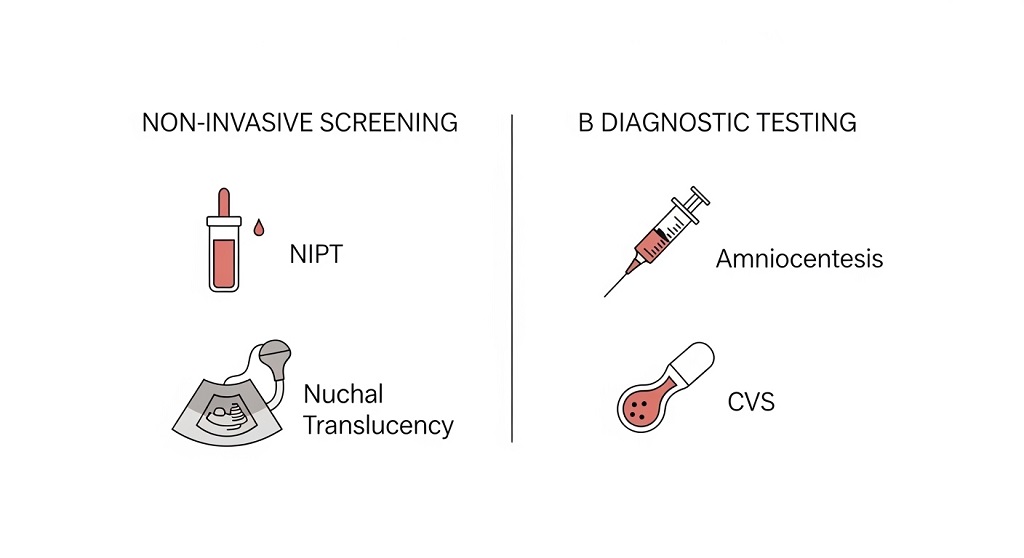
Screening typically begins in the first trimester between weeks 10 and 13, followed by additional assessments during the second trimester if needed.
Standard screening timeline:
- Weeks 10–13: First-trimester combined screening or NIPT
- Weeks 15–22: Second-trimester maternal serum screening
- Weeks 18–22: Detailed anomaly ultrasound
- Weeks 15–20: Amniocentesis if indicated
Timing matters because detection accuracy depends heavily on fetal developmental stage. Early screening improves decision-making flexibility.
What is first-trimester combined screening?
First-trimester combined screening uses maternal blood markers and ultrasound measurement of nuchal translucency to estimate risk for Down syndrome and trisomy 18.
This screening includes:
- Ultrasound measurement of nuchal translucency thickness
- Pregnancy-associated plasma protein-A (PAPP-A)
- Free beta-human chorionic gonadotropin (β-hCG)
Detection rates reach approximately 85–90% for Down syndrome when performed correctly between 11 and 13 weeks of pregnancy.
Increased nuchal translucency thickness may also indicate congenital heart defects or genetic syndromes unrelated to chromosomal abnormalities.
What is noninvasive prenatal testing (NIPT)?
Noninvasive prenatal testing analyzes fetal DNA fragments in maternal blood to screen for major chromosomal abnormalities with high accuracy.
NIPT can be performed as early as week 10 and detects:
- Trisomy 21
- Trisomy 18
- Trisomy 13
- Sex chromosome conditions
Detection accuracy exceeds 99% for Down syndrome in high-risk pregnancies, making it one of the most reliable screening tools currently available.
However, NIPT remains a screening test. Confirmation requires diagnostic procedures such as amniocentesis.
Is NIPT better than traditional screening methods?
NIPT provides higher accuracy and lower false-positive rates than traditional serum screening but does not replace diagnostic testing when confirmation is required.
| Screening Method | Accuracy | Timing | Risk to Pregnancy |
|---|---|---|---|
| First-trimester screening | 85–90% | Weeks 11–13 | None |
| Second-trimester screening | 70–75% | Weeks 15–22 | None |
| NIPT | Up to 99% | Week 10 onward | None |
| Amniocentesis | Diagnostic | Weeks 15–20 | Small miscarriage risk |
What is second-trimester maternal serum screening?
Second-trimester screening evaluates maternal blood markers to estimate risk for chromosomal abnormalities and neural tube defects.
Common markers include:
- Alpha-fetoprotein (AFP)
- Estriol
- Human chorionic gonadotropin
- Inhibin A
Elevated AFP levels may indicate neural tube defects such as spina bifida, while abnormal hormone levels can suggest chromosomal conditions.
What role does ultrasound play in detecting genetic abnormalities?
Ultrasound identifies structural abnormalities that may signal underlying chromosomal conditions.
The mid-pregnancy anomaly scan evaluates:
- Brain structure
- Heart chambers
- Spine formation
- Limb development
- Facial features
- Placental position
Soft markers such as short femur length or echogenic bowel sometimes increase suspicion for genetic abnormalities and guide further testing decisions.
What is chorionic villus sampling (CVS)?
Chorionic villus sampling is a diagnostic test that collects placental tissue to confirm chromosomal abnormalities during early pregnancy.
Performed between weeks 10 and 13, CVS detects:
- Chromosomal disorders
- Single-gene inherited diseases
- Sex chromosome abnormalities
Because CVS analyzes fetal genetic material directly, it provides definitive results rather than probability estimates.
What is amniocentesis and when is it recommended?

Amniocentesis is a diagnostic procedure that analyzes amniotic fluid to confirm genetic abnormalities after screening indicates elevated risk.
Doctors typically recommend amniocentesis when:
- NIPT shows abnormal results
- Ultrasound detects structural anomalies
- Parents carry genetic mutations
- Maternal age exceeds 35 years
The miscarriage risk from amniocentesis is generally estimated at less than 0.3% when performed by experienced specialists.
Who should consider prenatal genetic screening?
All pregnant individuals can benefit from screening, but testing is especially recommended for those with higher genetic risk factors.
Higher-risk groups include:
- Maternal age over 35
- Family history of genetic disorders
- Previous pregnancy with chromosomal abnormality
- Abnormal ultrasound findings
- Positive carrier screening results
Professional obstetric organizations now recommend offering screening to every pregnancy regardless of age category.
Can genetic screening detect all fetal abnormalities?
No screening method detects every genetic condition, but combining tests significantly improves detection accuracy.
Screening primarily identifies:
- Common chromosomal abnormalities
- Neural tube defects
- Selected inherited disorders
Rare mutations and subtle developmental conditions may remain undetected until later pregnancy stages or after birth.
Are prenatal genetic screening tests safe?
Noninvasive screening tests are safe because they require only maternal blood samples and ultrasound imaging.
Diagnostic procedures carry minimal but measurable risk:
- CVS miscarriage risk: approximately 0.2–0.3%
- Amniocentesis miscarriage risk: approximately 0.1–0.3%
Risk levels depend strongly on provider experience and clinical setting.
How accurate are prenatal genetic screening tests?
Accuracy varies by test type, with NIPT providing the highest detection rates among noninvasive methods.
Approximate detection performance:
- NIPT: >99% for Down syndrome
- Combined screening: ~90%
- Quad screening: ~75%
False positives remain possible, which is why confirmatory testing is essential before diagnosis.
Centers for Disease Control and Prevention (.gov): Genetic Testing – Provides the overall public health context and standard definitions of genetic testing.
Conclusion
Screening for fetal genetic abnormalities during pregnancy gives families critical insight into fetal health long before birth. Modern tools such as NIPT, ultrasound anomaly scans, CVS, and amniocentesis allow early detection of chromosomal conditions with high accuracy and minimal risk when used appropriately.
The most effective approach combines first-trimester screening with advanced follow-up testing when needed. This layered strategy improves detection rates and supports better pregnancy management decisions.
If you are planning pregnancy or currently expecting, speak with a qualified obstetric specialist or genetic counselor early. Personalized screening plans provide the strongest protection against uncertainty and ensure timely access to diagnostic care when required.
FAQ: Screening for Fetal Genetic Abnormalities During Pregnancy
What is the earliest test for detecting genetic abnormalities in pregnancy?
Noninvasive prenatal testing (NIPT) can detect chromosomal abnormalities as early as 10 weeks of pregnancy using maternal blood samples.
Is prenatal genetic screening mandatory?
Prenatal genetic screening is optional but strongly recommended because it provides early risk assessment for chromosomal conditions.
Can ultrasound alone detect Down syndrome?
Ultrasound may identify markers associated with Down syndrome but cannot confirm diagnosis without genetic testing.
What happens if screening results are abnormal?
Abnormal screening results are followed by diagnostic procedures such as amniocentesis or chorionic villus sampling for confirmation.
Does maternal age affect genetic abnormality risk?
Yes, risk increases with maternal age, particularly after age 35, though abnormalities can occur at any age.
Are prenatal screening tests covered by insurance?
Coverage varies by country and provider, but many health systems now include at least basic screening in routine prenatal care.
Read More Also: How to Recover Faster After Knee Surgery During Travel
Discover More: How to Cut Ultra-Processed Foods Without Feeling Deprived


