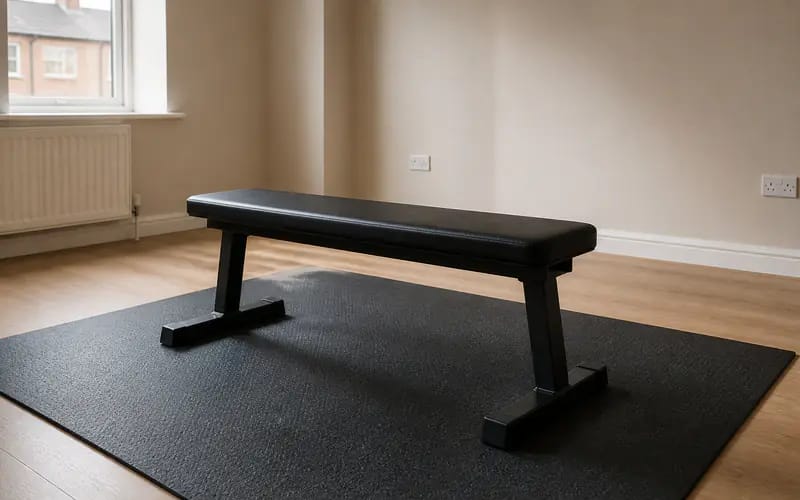
Setting Up a Flat Weight Bench
A flat weight bench is a very simple piece of home gym equipment. However, the way in which it is set up can cause problems. A wobbly bench, slippery floor and badly placed rack can cause problems during what seems to be a very straightforward session of weight training.
Choose A Suitable Spot
Ideally a flat weight bench should be placed in a room that is large enough to allow for at least a meter of space to the side and rear of the bench. Ideally this space should also be wide enough to allow for a barbell to be placed on the bench. In addition to space for lying on the bench and for placing weights on the bench, space is also required to rack and unt rack weights safely without having to twist. A corner or against a wall is not an ideal location for a flat weight bench as this restricts the users position for a variety of exercises, and also restricts a users ability to react to a trapped limb or a dropped weight.
Check The Floor And Use A Mat
A rubber gym mat will protect your flooring from damage caused by dropped weights. Furthermore it can provide sufficient cushioning to absorb noise produced by falls. Most importantly, however, a rubber gym mat will provide sufficient grip for the feet of your flat weight bench to prevent it slipping on smooth surfaces such as concrete, laminate or tile. Make sure the mat does not bunch up or ruck when placed under the legs of your bench. If it does, it will affect the level of your bench.
Inspect The Frame Before First Use
Inspect the frame for any sign of damage before you even start to add weight to the bench. The bolts for the flat pack type of fitting that is often provided for things like the arms of the bench are usually loosened for transport. Make sure to tighten them up as much as possible with the provided tool before you start to add weight to the bench. Also check the feet of the bench for any sign of damage and make sure they are tightened up as much as possible. Give the bench a good push down in the middle to test it out and then rock it from side to side to check for any movement.
Position It Relative To A Rack
Position the flat weight bench in relation to a squat rack or power rack. Ideally the bench should be positioned at the centre of the rack’s uprights. Make sure there is sufficient clearance to allow the bar to travel down the rack without coming into contact with the bench. For freestanding work with dumbbells or a barbell ensure that the bench is positioned well away from any shelving, mirrors etc. and that there is no risk of any weights slipping and hitting anything.
Sort Out Lighting And Airflow
A home gym should be well lit. Dim corners can create problems when lowering a bar to your chest or performing bench press with a training partner. Provide additional light such as a lamp. If possible, reposition the bench near a window or above the bench install a ceiling lamp. Air circulation is also important. A poorly ventilated home gym can make exercising with heavy weights very problematic. In addition, increased sweating can lead to problems with grip. In order to train in a healthy way and as part of an active lifestyle, it is recommended to train with regularity and to do strength training.
Keep Weights Stored, Not Scattered
Weight plates and dumbbells on the floor are a trip hazard waiting to happen. A simple weight rack, plate tree or even a dedicated corner of the home gym to store weights will mean they are out of the way but still easily reached for during your workout. The biggest cause of accidents in a home gym where people have been injured is fumbling for a weight in the middle of a set. Keeping your home gym tidy will help to prevent accidents and also make it easier to see if something has been damaged or is missing.
Check Capacity And Pad Condition
There’s usually a load capacity for flat weight benches. The maximum weight of the bench for lifting is typically shown on the frame of the bench, in the manual or on the packaging for new benches. This includes your body weight and weight of any other loads that you use. Also make sure the padding on the bench is not damaged in any way, particularly split seams or compressed foam as this can shift when you’re in the middle of a rep and affect your balance.
Run A Quick Check Every Session
3 Simple Checks Every Time to Use Your Weight Bench Give your flat weight bench a wobble test by pushing down on both ends. Check all the main bolts to ensure they haven’t come loose and are tightened securely. Finally, check the space around you for any weights, gym bags or cables that could cause a fall. Most of these checks will take less than a minute to complete, but could prevent serious harm should something go wrong. These checks are often recommended by fitness professionals in respect of strength training technique.
Once you have set up your home gym the way you like it, it really doesn’t take much to have safe training every time you hit the gym. A stable bench, clear floor space and a few checks before you start is all that is required for a safe and effective home gym.